Gout
Introduction to Gout
Gout can be a painful condition, which often affects men rather, then women. The most common age group that is affected is between 50-60, however, it can occur in young males and females. It has been referred to as an acquired disease or a form of arthritis. The inflammation and pain in the joint is caused due to a build up of excess uric acid crystals. It can affect other parts of the body such as the hands.
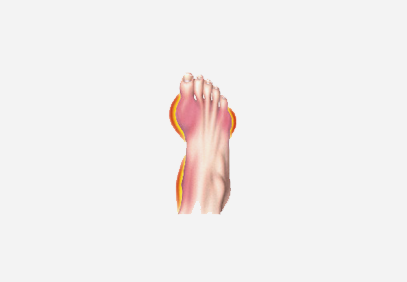
- Photograph 1.
It usually affects the big toe but can affect other areas around the feet. (refer to picture)
- Gout results in a red, swollen, painful toe.
Symptoms of Gout
- Sudden intense throbbing pain accompanied by redness and swelling.
- Episodes of attack, with the attacks lasting approximately 3-5 days. These attacks may occur in the middle of the night.
Conditions that Resemble Gout
- Osteoarthritus of the 1st toe
- Injury to the toe.
- Inflammatory arthritis of the foot.
What your Chiropodist will do:
- The initial diagnosis of the condition is extremely important. The patients history of the onset of the disorder and a visual examination of the area will confirm the diagnosis. The chiropodist may request that you have x-rays taken of your foot. This will enable the chiropodist to make a diagnosis of the condition. When a patient has suffered from gout for a considerable amount of time, the x-ray may show destruction of the joint. Blood tests may also show elevated uric acid levels.
- The chiropodist may recommend a course of medication to your GP. This will provide immediate relief of the symptoms. A medication named Allopurinal is often used to treat gout.
- In extreme cases, the chiropodist may recommend surgery to remove gouty deposits.
- Orthosis and shoe stretching may also help to alleviate the symptoms.
- Protective shields and padding can also relieve pressure from the affected toe.



 Dr Foot Recommends
 £ 23.00
 £ 25.00
  Dr Foot Insoles are engineered to combat over pronation and provide greater stability and maximum support. Ideal for patients seeking arch support for prevention and treatment of sports injuries and foot pain such as bunions, ball of the foot pain, flat feet, neuroma, over pronation, heel pain and many other conditions.